How we built Harmony Quest.
We started with one rule: the game has to be fun first. If people don't want to pick up the cards, nothing else matters.
So we ran a lot of game nights. Friends. Strangers. Big tables. Small ones. We watched what made people lean in, what made them laugh, and what made them quietly check their phone. Then we kept iterating.
We landed on a simple system: one dice, three decks. Communication, Challenge, and Chance. The dice picks where the table goes next, so the energy keeps flexing: a conversation, then an activity, then a story moment that flips the round.
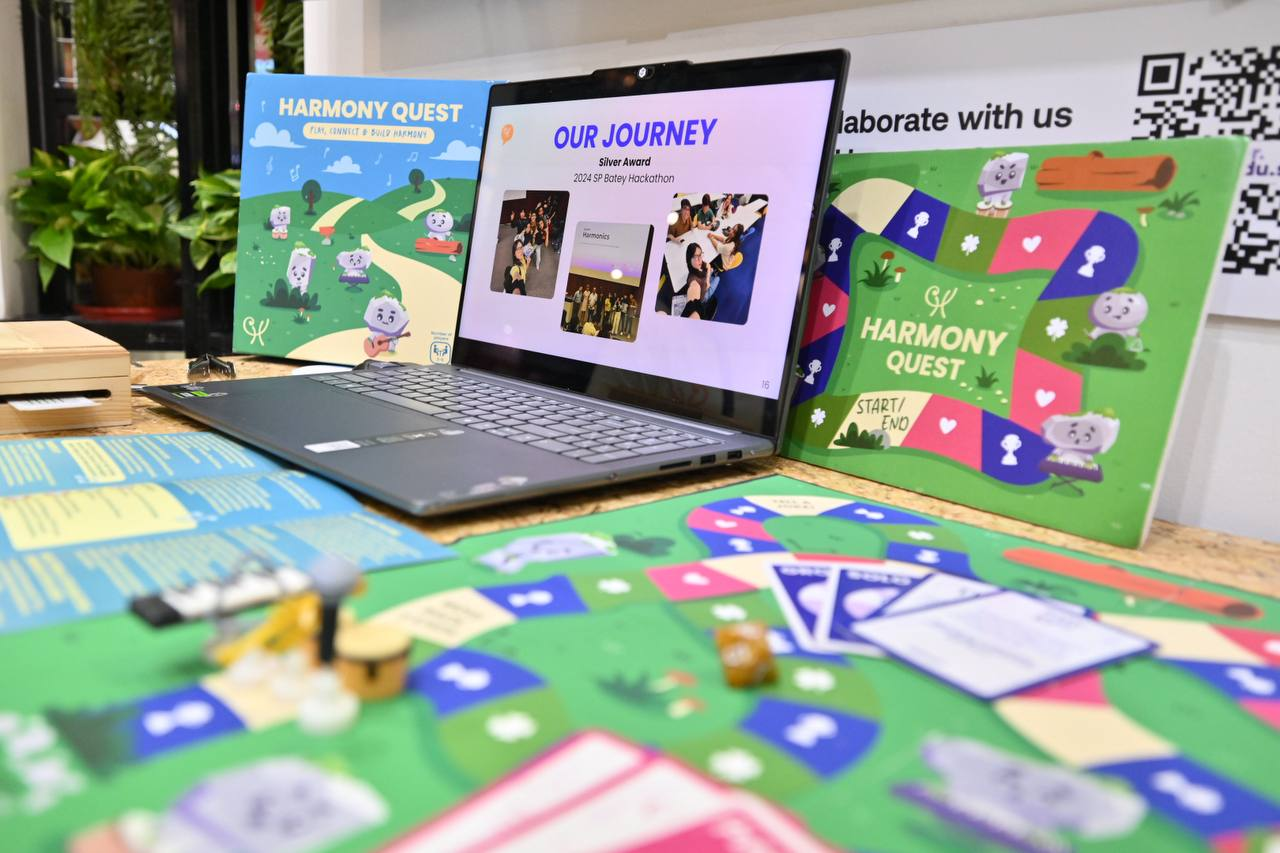
And then the music box. Honestly, it started as a tangent. We were obsessed with those little hand-crank boxes, the ones with the paper strips, and someone half-joked: what if your game night became a song? We tried it. The table fell apart laughing. We knew it had to stay.
The music box isn't the point of the game. It's the souvenir. The thing you'll still have a year later, tucked on a shelf, that plays back five seconds of one very specific night.
Underneath all of it, we still believe the same thing we started with: the best relationships are built one ridiculous, screen-free night at a time. We just think the easiest way to get there is to make the night really, really fun.